
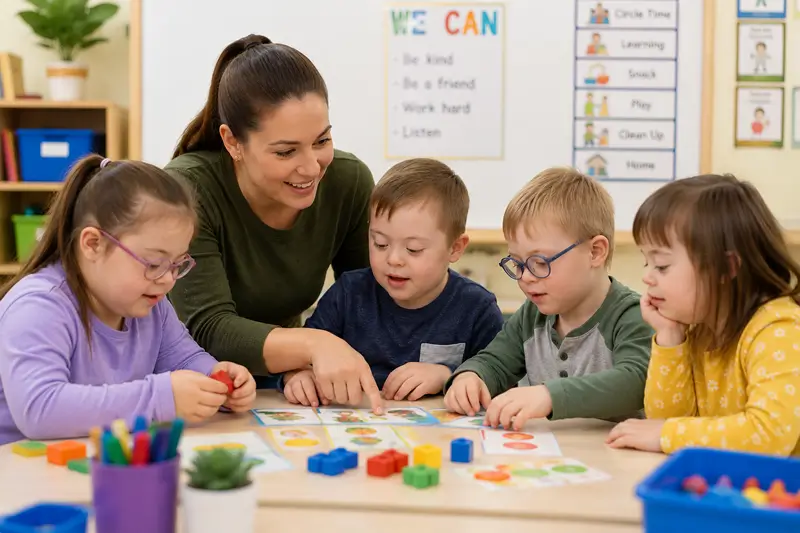
When people hear the term Applied Behavior Analysis (ABA), they often associate it primarily with autism. However, the principles of ABA can also be used to support individuals with Down syndrome and other developmental disabilities.
Children and adults with Down syndrome have their own individual strengths, personalities, learning styles, and support needs. Some may benefit from additional help developing communication, daily living, social, academic, or independence skills. Others may experience behaviors that interfere with learning, family routines, school participation, or community activities.
Applied Behavior Analysis provides an individualized, evidence-based approach for understanding behavior and teaching meaningful skills that can improve everyday life.
At Behavioral Directions, LLC, our behavior analysts and psychological professionals provide individualized behavioral assessment and intervention services for children, teens, adults and families throughout Northern Virginia.
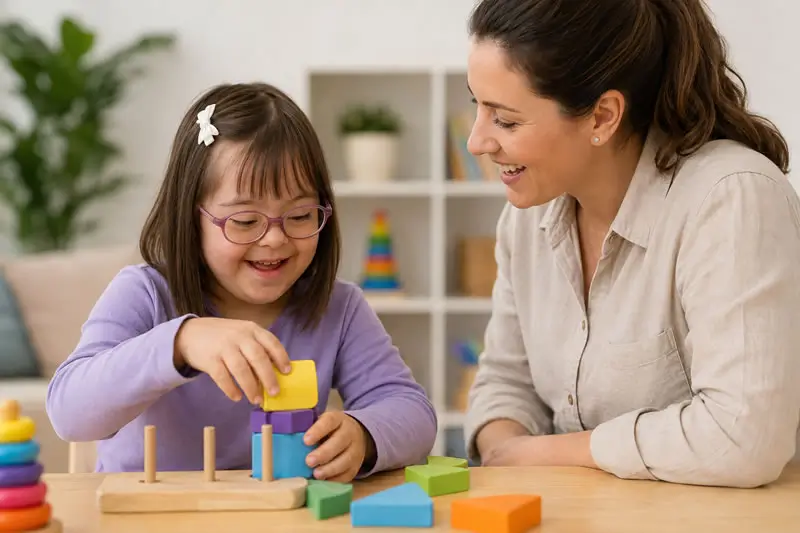
What Is Applied Behavior Analysis (ABA)?
Applied Behavior Analysis is a scientific approach to understanding how behavior is influenced by a person’s environment and experiences.
An important part of ABA is recognizing that behavior serves a purpose. Rather than simply labeling a child as difficult, uncooperative, or stubborn, a behavior analyst looks more closely at what happens before and after a behavior and what the individual may be communicating or accomplishing through that behavior.
For example, a child might refuse a task because:
- The task is difficult or frustrating
- The instructions are unclear
- The child needs help communicating what they want
- The behavior has helped them avoid similar tasks in the past
- They are seeking access to an activity or item
- They are trying to gain attention
- There may be sensory or physical factors involved
Understanding why a behavior occurs can help families and professionals develop more effective and supportive strategies.
Is ABA Used for Down Syndrome?
Yes. ABA principles can be applied to individuals with a variety of developmental and behavioral needs, including individuals with Down syndrome.
Research has examined ABA-based interventions for people with Down syndrome across areas such as communication, skill development, and challenging behavior.
Importantly, ABA for a person with Down syndrome should never be a one-size-fits-all program. Effective behavioral intervention begins with the individual—their abilities, needs, environment, family priorities, and meaningful goals.
The objective is not to change who the person is. Instead, intervention should focus on teaching useful skills, increasing independence, improving communication, and addressing behaviors that interfere with the person’s quality of life.
How Can ABA Help a Child With Down Syndrome?
The specific goals of behavioral intervention will vary from one child to another. Depending on the results of an assessment, ABA strategies may be used to address several areas.
- Communication Skills
Difficulty communicating wants, needs, preferences, or frustration can sometimes contribute to challenging behavior.
Behavioral strategies can be used alongside other appropriate services to help teach functional communication, such as:
- Requesting preferred items or activities
- Asking for assistance
- Indicating when a break is needed
- Making choices
- Following and responding to instructions
- Initiating interactions
- Expanding functional communication
When children have effective ways to communicate, they may have less need to rely on challenging behaviors to express themselves.
- Daily Living and Self-Help Skills
Greater independence with everyday routines can have a meaningful impact on both the individual and the family.
Depending on age and ability, behavioral teaching strategies may help develop skills involving:
- Dressing
- Toileting
- Handwashing
- Brushing teeth
- Eating and mealtime routines
- Cleaning up
- Completing household routines
- Following schedules
- Preparing for school
- Increasing independence with age-appropriate responsibilities
Complex activities can be broken into smaller, achievable steps and taught systematically.
- Following Routines and Transitions
Transitions can sometimes be difficult, particularly when a child is moving away from a preferred activity or encountering an unexpected change.
ABA strategies may help teach children how to:
- Follow predictable routines
- Transition between activities
- Use visual schedules
- Wait appropriately
- Complete a task before accessing a preferred activity
- Tolerate reasonable changes in routines
- Respond to instructions more independently
The goal is to gradually build skills rather than simply demand compliance.
- Addressing Challenging Behaviors
Some individuals with Down syndrome may display behaviors that interfere with learning, safety, relationships, or participation in everyday activities.
These could include behaviors such as:
- Tantrums
- Aggression
- Refusal
- Elopement or running away
- Throwing objects
- Self-injurious behavior
- Disruptive behavior
- Difficulty tolerating frustration
The presence of a challenging behavior does not automatically tell us why it is happening.
This is where behavioral assessment becomes especially important.
Understanding the Function of Behavior
One of the fundamental principles of ABA is determining the function of a behavior—in other words, what the person obtains or avoids through that behavior.
Behavior may be associated with access to attention, preferred objects or activities, avoiding or escaping difficult situations, or sensory and physical experiences.
A behavior analyst can collect information about what happens before, during, and after a behavior to identify patterns.
Once the likely function is better understood, an individualized intervention can focus on teaching appropriate alternatives.
For example, if a child frequently becomes upset when schoolwork becomes difficult, simply telling the child to stop may not address the underlying issue. A more effective plan might involve adjusting the difficulty of the task, teaching the child to request help or a break, reinforcing appropriate communication, and gradually building tolerance for completing challenging activities.
- Social and Play Skills
Social development is another area in which behavioral teaching strategies may be helpful.
Depending on the individual’s goals, intervention might address:
- Taking turns
- Sharing
- Participating in games
- Initiating play
- Responding to peers
- Waiting
- Joining group activities
- Understanding boundaries
- Developing age-appropriate social independence
These skills can be practiced in natural settings so they become useful beyond the therapy environment.
- School Readiness and Learning Skills
ABA can also help develop behaviors that support successful learning.
Examples include:
- Sitting and participating during appropriate activities
- Attending to instructions
- Completing tasks
- Following multi-step directions
- Asking for help
- Working independently
- Moving between classroom activities
- Increasing persistence with challenging tasks
The exact goals should always reflect the child’s developmental level and individual educational needs.
- Building Independence
One of the most valuable long-term goals of behavioral intervention is greater independence.
As children grow, priorities may evolve from early communication and self-help skills to more complex abilities involving household responsibilities, community participation, personal organization, social interaction, and other functional life skills.
Behavioral strategies can be adapted as an individual’s needs change over time.
ABA Should Be Individualized for the Person With Down Syndrome
No two individuals with Down syndrome are exactly alike.
A strategy that is successful for one person may not be appropriate for another. This is why behavioral treatment should begin with careful assessment rather than a predetermined program.
An individualized behavioral plan may consider:
- The person’s age and developmental level
- Communication abilities
- Strengths and interests
- Current skills
- Family priorities
- School and community environments
- Behaviors interfering with daily life
- Medical, developmental, educational, and environmental considerations
- Skills that would meaningfully improve independence and quality of life
Behavioral services may also be coordinated with parents, educators, physicians, speech-language pathologists, occupational therapists, and other professionals when appropriate.
The Importance of Positive Reinforcement
Positive reinforcement is an important component of ABA.
When a meaningful behavior is followed by something motivating or rewarding to the individual, that behavior may be more likely to occur again.
Reinforcement does not have to mean candy or toys. Depending on the individual, reinforcement could include praise, attention, a favorite activity, music, games, movement, access to a preferred item, or another personally meaningful experience.
A skilled behavior analyst identifies what motivates the individual and uses those interests to make learning more successful and engaging.
Parent and Caregiver Involvement Matters
Skills are most valuable when they extend beyond a therapy session.
Parents and caregivers can play an important role in helping children practice new skills during everyday routines. Behavioral professionals may help families understand why certain behaviors occur and learn strategies they can use consistently at home and in the community.
This may include strategies for:
- Morning and bedtime routines
- Mealtimes
- Homework
- Community outings
- Sibling interactions
- Transitions
- Communication
- Independence and self-care
The goal is to develop practical strategies that fit naturally into the family’s life.
When Should Parents Consider a Behavioral Assessment?
Parents may want to consider consulting a qualified behavioral professional when behaviors or skill deficits begin interfering significantly with the child’s ability to participate successfully at home, school, or in the community.
For example, an assessment may be helpful when a child is experiencing persistent difficulties involving communication, aggression, self-injury, transitions, daily routines, independence, social participation, or other behaviors that affect quality of life.
It is also important to remember that a sudden or significant change in behavior can sometimes be related to medical, sleep, sensory, communication, or environmental factors. Behavioral concerns should therefore be considered within the context of the whole person.
ABA Services for Down Syndrome and Developmental Disabilities in Northern Virginia
Families searching for ABA services for Down syndrome in Northern Virginia should look for professionals who understand that behavioral treatment must be individualized to the person rather than based solely on a diagnosis.
Behavioral Directions, LLC has served the community since 2001 and provides behavioral assessment and intervention services for individuals with developmental and behavioral needs.
Services may be provided across clinic, home, school, and community settings when appropriate, allowing behavioral goals to focus on the situations that matter in everyday life.
Behavioral Directions serves families in areas of Fairfax County and Loudoun County, Virginia, providing families with access to experienced behavioral professionals close to home.
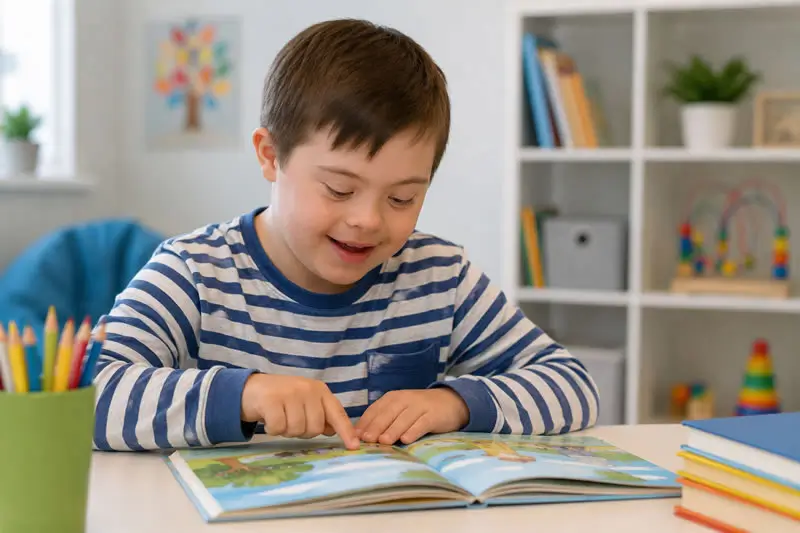
Helping Individuals Build Meaningful Skills
A diagnosis of Down syndrome does not define a person’s potential.
With individualized teaching, appropriate support, family involvement, and opportunities to practice meaningful skills, individuals with Down syndrome can continue developing communication, independence, social abilities, and everyday living skills.
Applied Behavior Analysis can provide families and professionals with a structured way to understand behavior, measure progress, teach new skills, and develop strategies based on the needs of the individual.
If your family is experiencing behavioral challenges or would like to learn whether behavioral assessment and intervention may be appropriate for a child or family member with Down syndrome, contact Behavioral Directions, LLC to learn more about available behavioral services in Northern Virginia.
This article is intended for educational purposes and should not replace individualized medical, psychological, educational, or behavioral advice.